Lipedema and lymphatic drainage are becoming increasingly relevant topics in aesthetic medicine, rehabilitation, physiotherapy and women’s health. While lymphatic support may be part of professional care, lipedema itself should not be approached as conventional fat accumulation or as a simple body-contouring concern.
For healthcare professionals, lipedema requires a broader clinical conversation: tissue characteristics, local discomfort, fluid tendency, mobility, patient tolerance, follow-up and multidisciplinary care.
This is why technology should not be presented as a standalone solution. Its value depends on how it is integrated into structured, professional and responsible protocols.
At Capenergy Medical Technology, we believe that advanced radiofrequency should support clinical reasoning, not replace it. In lipedema-related protocols, this means combining technology, professional evaluation, patient comfort and careful monitoring over time.
Why Lipedema Requires a Different Clinical Conversation
In many clinical and aesthetic environments, body contouring is often associated with volume reduction, silhouette improvement or localized fat management. Lipedema requires a more careful approach.
Lipedema is commonly associated with disproportionate adipose tissue distribution, tissue sensitivity, heaviness, discomfort, swelling tendency and functional impact. These factors make the clinical conversation more complex than a standard aesthetic concern.
For this reason, professionals should avoid reducing lipedema to a purely cosmetic issue. A responsible approach should consider:
- Tissue quality and sensitivity.
- Local discomfort or pain.
- Fluid tendency and heaviness.
- Mobility and functional limitations.
- Patient tolerance during treatment.
- Evolution over time.
- The need for multidisciplinary management.
The goal is not to make isolated promises, but to build a professional framework where technology, manual techniques, compression, movement, clinical assessment and follow-up can work together.
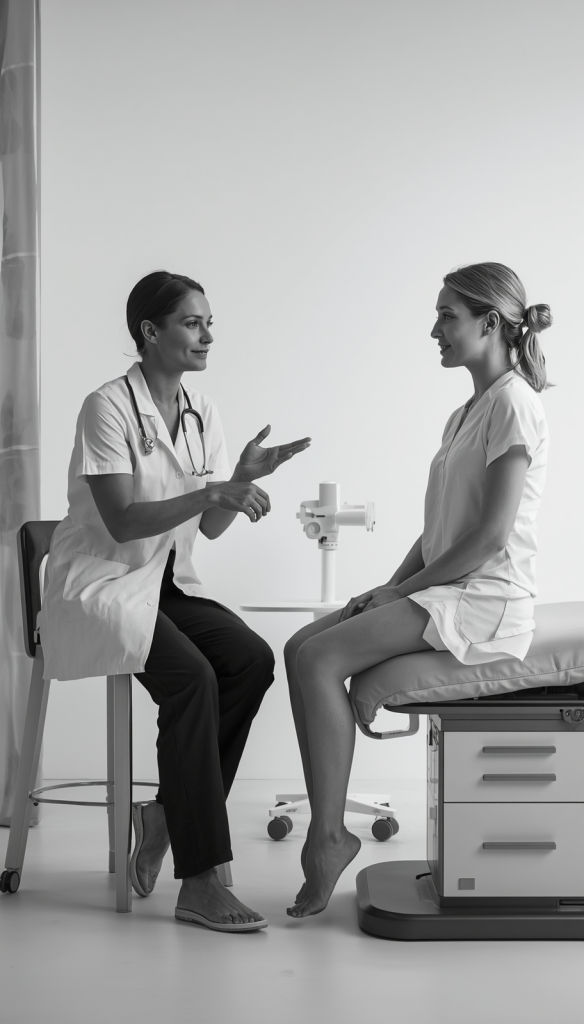
The Role of Lipedema and Lymphatic Drainage in Tissue-Focused Care
Lymphatic drainage is often part of the professional discussion around lipedema-related care because fluid mobilization, tissue comfort and heaviness are relevant clinical concerns.
Traditional manual lymphatic drainage can be valuable, but it also requires time, physical effort and direct manual contact. In some patients, especially those with high sensitivity, discomfort or allodynia, manual contact may be difficult or poorly tolerated.
This is where technology-assisted approaches can become clinically interesting.
Capenergy’s electromagnetic lymphatic drainage approach is based on advanced radiofrequency technology designed to support the mobilization of body fluids in professional clinical environments. It is intended to stimulate lymphatic, blood and interstitial fluid circulation as part of a structured protocol.
This does not mean replacing clinical judgment or manual expertise. Instead, it means giving professionals an additional tool to support protocol efficiency, patient comfort and tissue-focused care.
From Manual Drainage to Technology-Assisted Protocols
Manual lymphatic drainage has traditionally been used to stimulate lymph flow and support the movement of accumulated fluids. However, it can be physically demanding for the professional and limited by patient tolerance.
Technology-assisted lymphatic drainage can help clinics approach this area differently.
In Capenergy’s electromagnetic drainage protocol, active plates are placed on the soles of the feet and passive plates are placed at kidney level. According to the protocol described by Capenergy, this creates a double stimulation approach, generally performed in sessions of approximately 30 minutes.
Because the protocol is automatic, the professional may be able to combine it with additional manual techniques or other clinical procedures when appropriate.
For clinics, this can represent an important operational advantage: the professional can support lymphatic drainage while maintaining a structured, controlled and reproducible protocol.
Why Comfort and Control Matter
In lipedema-related protocols, comfort is not a secondary detail. It is central to patient adherence and professional management.
Some patients may present sensitivity, discomfort or difficulty tolerating direct contact. For this reason, technologies used in these protocols should prioritize control, safety and adaptability.
Capenergy devices incorporate temperature control through sensors in the active plates. This helps professionals maintain a controlled treatment environment and assures patient comfort during the session.
This is particularly relevant when working with patients who may require a more careful and progressive approach, such as those with lymphedema, lipedema or allodynia.
A responsible technology should allow the professional to adapt the protocol according to tissue response, patient tolerance and clinical objectives.
Technology Should Support the Protocol, Not Replace It
Advanced technology can help clinics improve protocol efficiency, but it should always be used within a professional framework.
For lipedema-related applications, clinics should evaluate several key questions before implementing any technology:
- Is the technology designed for professional clinical use?
- Can the protocol be adapted according to tissue response?
- Is patient comfort monitored during the session?
- Does the technology support fluid mobilization and tissue care?
- Can the clinic document evolution over time?
- Are professionals trained in responsible implementation?
- Can the technology fit within a broader multidisciplinary approach?
These questions are essential because lipedema-related care is not only about equipment. It is about clinical process, patient selection, protocol design, follow-up and professional communication.
When clinics evaluate technology for lipedema and lymphatic drainage, the focus should remain on clinical reasoning, patient tolerance and responsible protocol design.
A Multidisciplinary Perspective
Lipedema-related care often requires collaboration between different healthcare professionals.
Depending on the patient’s needs, this may involve aesthetic physicians, physiotherapists, rehabilitation specialists, lymphatic drainage therapists, nutrition professionals, vascular specialists, women’s health professionals or other medical teams.
Within this context, technology should be integrated as part of a broader strategy. It may support fluid mobilization, tissue comfort, local circulation, protocol efficiency and professional workflow, but it should not be presented as a single isolated answer.
The strongest clinical value comes from combining:
- Proper assessment.
- Clear objectives.
- Patient education.
- Structured protocols.
- Professional training.
- Follow-up over time.
- Responsible communication.
This is especially important for clinics and medical centers that want to differentiate themselves through evidence-informed, patient-centered and professional care.
Capenergy’s Approach to Lipedema-Related Protocols
Capenergy Medical Technology focuses on high-power radiofrequency, TecarEvolution® and professional clinical protocols for medical, aesthetic, rehabilitation and women’s health environments.
In lipedema-related care, the value of technology is not based on exaggerated promises. It is based on control, comfort, protocol design, professional training and structured follow-up.
TecarEvolution® represents Capenergy’s approach to going beyond conventional radiofrequency. It is designed as an advanced clinical technology platform for professionals who need precision, versatility and protocol-based applications.
For clinics, this means the possibility of integrating advanced radiofrequency into a wider care strategy that may include lymphatic drainage, tissue-focused work, comfort management and professional monitoring.
For distributors and medical decision-makers, it offers a clinically relevant conversation: not simply what the device is, but how it can support different specialties and professional protocols.
Conclusion
Final Considerations for Professional Protocols
The future of advanced radiofrequency is not about isolated claims. It is about helping clinics deliver more structured, responsible and clinically meaningful protocols.
For healthcare professionals, understanding the relationship between lipedema and lymphatic drainage can help support more structured, responsible and tissue-focused clinical protocols.
Would you like to explore how Capenergy supports professional lipedema-related protocols?
Contact our clinical team to receive more information according to your specialty, clinic profile or distribution market.
