Overactive bladder is one of the most common and underestimated conditions affecting quality of life.
Getting up multiple times during the night, feeling that sudden urge that doesn’t allow enough time to reach the bathroom, reorganizing the entire day around the fear of leakage… Living with an overactive bladder or urgency urinary incontinence profoundly affects the daily lives of those who suffer from it. And although pharmacological treatments exist, many patients abandon them due to side effects or because they are simply not effective enough.
In this article, we explore how Capenergy’s second-generation radiofrequency is positioning itself as an innovative, side-effect-free solution for the treatment of overactive bladder (OAB) and urgency urinary incontinence (UUI). We explain the mechanism of action, the scientific evidence supporting it, and the benefits it can bring to your clinic and patients from the very first sessions.
What is overactive bladder and urgency urinary incontinence?
Overactive bladder is a syndrome characterized by urinary urgency, usually accompanied by increased daytime urinary frequency, nocturia, and in many cases, episodes of incontinence. It is not a structural problem, but a dysfunction in the nervous regulation of the detrusor muscle, which contracts involuntarily and inappropriately.
Urgency urinary incontinence (UUI) is the involuntary loss of urine associated with that urgent and impossible-to-postpone desire. It is one of the most limiting forms of incontinence because it can appear at any time, without sufficient warning, completely conditioning the social, professional, and personal life of those who experience it.
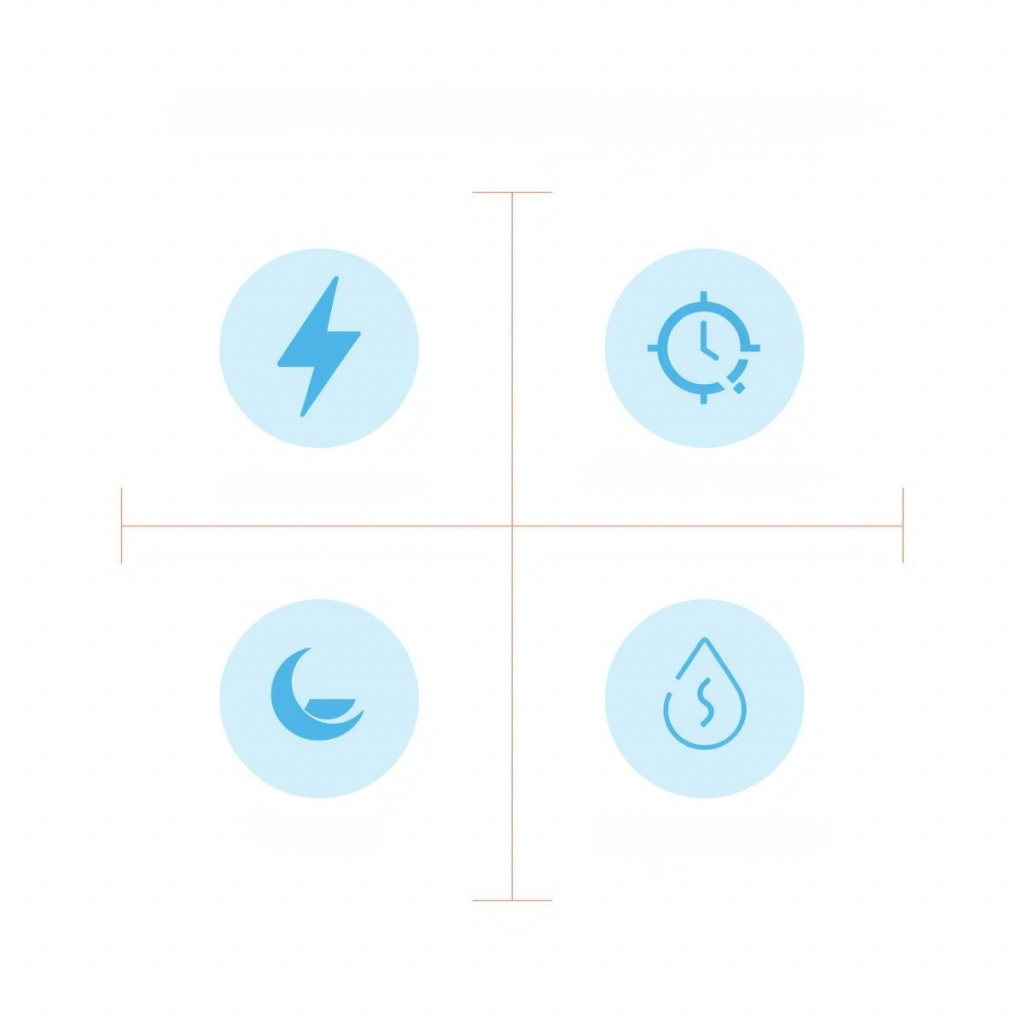
Overactive bladder causes urgency, frequency, nocturia and urgency incontinence, limiting daily life.
Main symptoms of overactive bladder
The four key symptoms that characterize overactive bladder syndrome are:
- Urinary urgency: a sudden, compelling need to urinate that is difficult or impossible to postpone. It is the central, defining symptom of the syndrome.
- Increased daytime urinary frequency: more than 8 voids per day under normal fluid intake conditions.
- Nocturia: the need to get up to urinate at least once per night, with the consequent impact on sleep quality and rest.
- Urgency urinary incontinence: involuntary loss of urine preceded or accompanied by the sensation of urgency.
Causes and risk factors of overactive bladder
Although the exact cause of overactive bladder cannot always be identified, several factors are known to contribute to its onset or worsening:
- Central or peripheral nervous system dysfunction: alterations in detrusor nerve regulation.
- Hormonal changes: especially estrogen deficiency in postmenopausal women, affecting the urethral and bladder mucosa.
- Pelvic floor weakness: from childbirth, previous surgeries or age-related muscle tone loss.
- Lifestyle-related habits: high caffeine, alcohol or irritant liquid consumption.
- Systemic conditions: obesity, diabetes, Parkinson’s disease or other neurological pathologies.
- Idiopathic: in many cases no specific organic cause is identified.
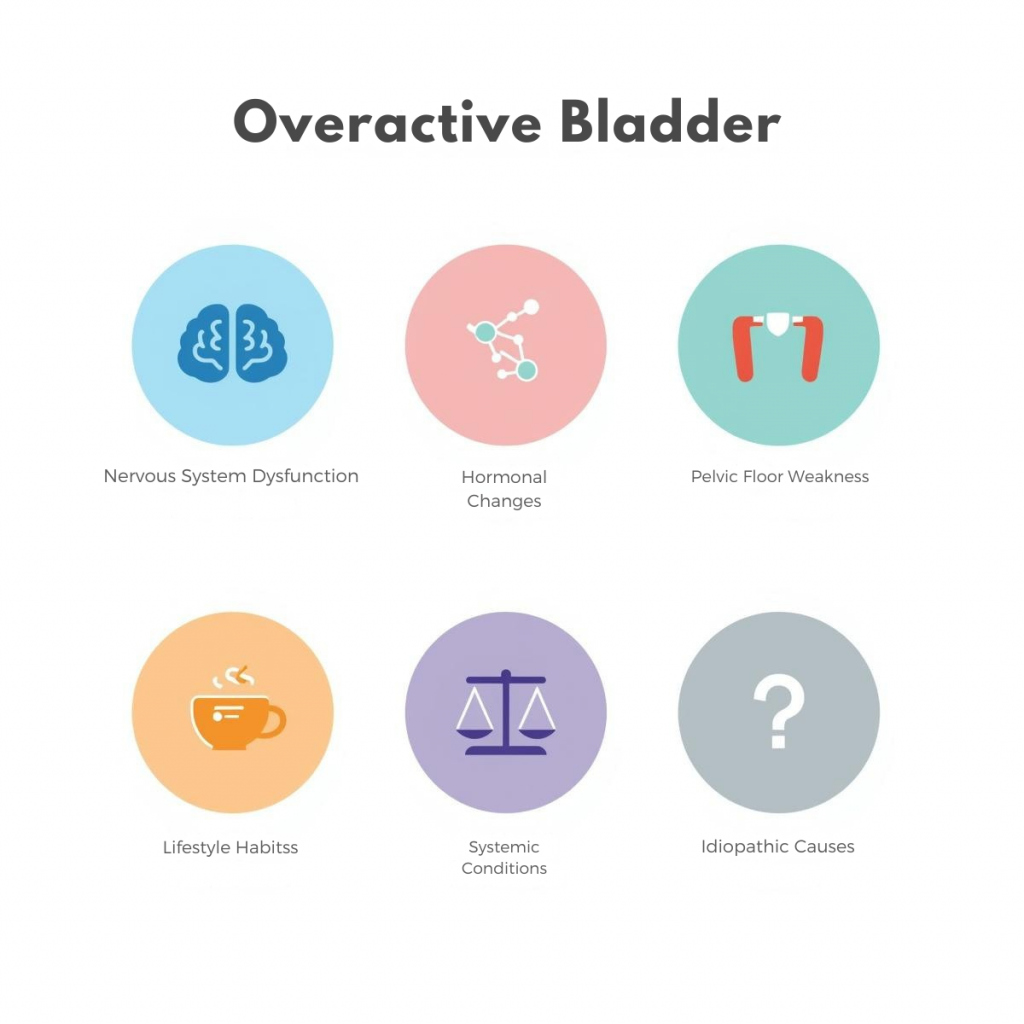
Hormonal, neurological, and pelvic floor factors contribute to the development of overactive bladder
The combination of these factors generates a state of bladder hyperexcitability that severely affects quality of life. This is where Capenergy’s radiofrequency offers a solid therapeutic alternative, backed by clinical studies published in internationally recognized scientific journals.
Traditional treatments for overactive bladder and urgency incontinence
The conventional management of overactive bladder and urgency urinary incontinence has historically combined three levels of treatment: behavioral modifications, pharmacotherapy, and third-line interventions. Each has its place, but also its limitations.
Most common conventional approaches
Behavioral modifications and bladder retraining: Changes in fluid intake, scheduled voiding, urgency suppression techniques and pelvic floor training form the foundation of treatment. They require high patient adherence and results are variable.
Pharmacological treatment:Antimuscarinics and beta-3 adrenergic agonists are the first- and second-line drugs. They are moderately effective but present frequent side effects—dry mouth, constipation, tachycardia, cognitive impairment in older patients—that lead many patients to abandon the treatment before achieving the expected benefit.
Third line: neuromodulation and botulinum toxin:Sacral neuromodulation and intravesical botulinum toxin injection are effective options for refractory cases, but they are invasive and costly procedures with a risk profile that many patients prefer to avoid.
In the face of these limitations, there is a growing demand for non-invasive, safe, side-effect-free alternatives. Capenergy’s radiofrequency meets this demand with solid scientific support and clinical results published in 2024 in an indexed medical journal.
How can Capenergy help patients with overactive bladder and urgency incontinence?
Capenergy’s second-generation radiofrequency technology acts on the deep tissues of the pelvic region through a controlled endothermal effect. The application of high-frequency currents through capacitive and resistive electrodes generates selective heating that stimulates connective tissue regeneration, improves local vascularization and has a modulating effect on detrusor muscle activity.
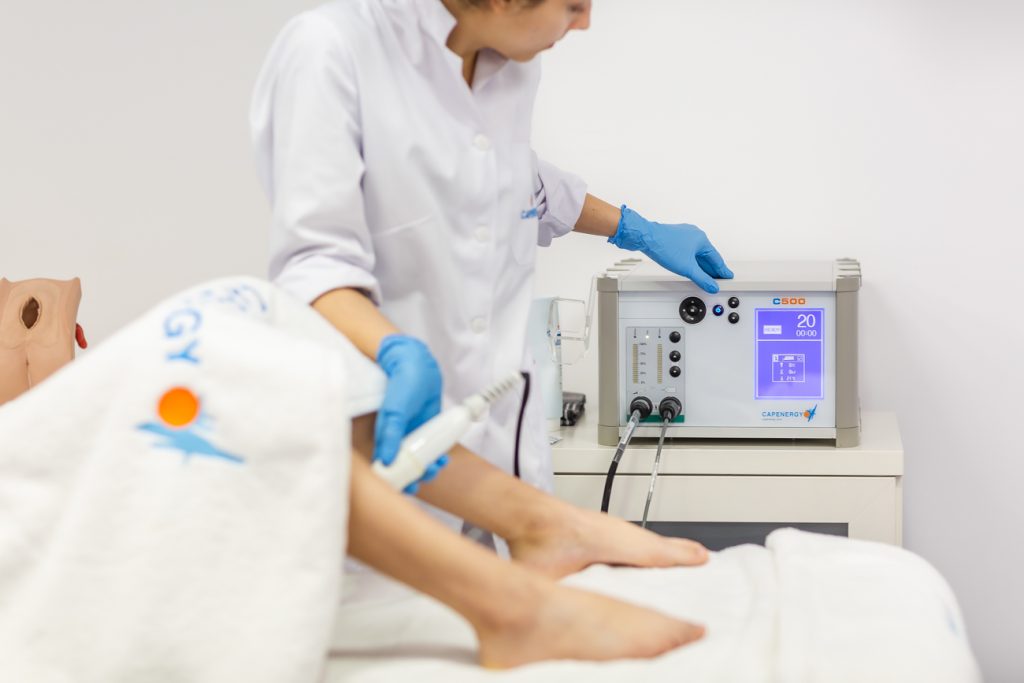
Treatment of overactive bladder with Capenergy radiofrequency: drug-free detrusor modulation
In the pilot study published in the journal Medicina (MDPI, 2024) by Franic et al., radiofrequency was evaluated as a new therapeutic option in 19 patients with overactive bladder and urgency urinary incontinence. The treatment consisted of 4 sessions of 20 minutes of radiofrequency, once a week. Results were statistically significant across all four main symptoms evaluated.
Demonstrated clinical results (Medicina, MDPI, 2024)
The results of the Franic et al. study show a radical transformation in the symptomatic profile of patients treated with radiofrequency:
- Before treatment: 63.2% of patients had severe symptoms and 5.3% very severe symptoms.
- After treatment: 42.9% had mild symptoms, 50% moderate and only 7% severe.
- All 4 main symptoms improved in a statistically significant way: urinary frequency, nocturia, urgency and incontinence.
- Best result for urinary urgency: the most limiting and impactful symptom improved with p=0.002.
- No relevant adverse effects reported in any of the 19 treated patients.
Benefits of Capenergy treatment
- Significant reduction in urinary urgency from the first sessions.
- Decreased daytime urinary frequency and nighttime episodes (nocturia).
- Fewer urgency incontinence episodes.
- Non-invasive technique, no medication and no known side effects.
- Brief and comfortable protocol: 4 sessions of 20 minutes, once a week.
- Ideal option for patients who do not tolerate medication or prefer to avoid it.
Do you want to incorporate this technology into your clinic?
Overactive bladder and urgency urinary incontinence are high-prevalence conditions that profoundly affect patients’ quality of life. Addressing them requires empathy, clinical rigor and access to the most effective therapeutic tools available. With Capenergy radiofrequency, you can offer your patients a non-invasive alternative, with scientific evidence published in 2024, and without side effects.

Capenergy: Advanced technology for the treatment of overactive bladder and female pelvic floor dysfunction
Capenergy’s Tecar Evolution devices offer a urogynecological upgrade consisting of a vaginal intracavitary electrode and specific software, specifically designed for female pelvic floor rehabilitation. Real-time temperature control guarantees treatment precision in each session, and the system’s versatility allows radiofrequency to be integrated into combined protocols with other pelvic floor physiotherapy techniques.
Benefits for your clinical practice
- Visible, measurable results from the first sessions.
- Safe treatment, no medication and no side effects.
- Scientific evidence published in 2024 in an indexed medical journal (Medicina, MDPI).
- High patient loyalty for a chronic condition with high emotional and social impact.
- Adaptable protocol: compatible with biofeedback, electrical stimulation and manual physiotherapy.
- Urogynecological upgrade for Tecar Evolution devices (C100-200-300-400).
Transform the care for your overactive bladder patients with the most innovative technology available. With Capenergy, you can offer a clinically backed, non-invasive and side-effect-free solution that significantly improves symptoms and quality of life for patients with OAB and urgency incontinence. Contact us and request a free demo.
Frequently asked questions about overactive bladder treatment with Capenergy
- Is Capenergy radiofrequency treatment painful? No. Patients experience a gentle and pleasant warmth during the session. It is a completely non-invasive, painless technique that is well tolerated even by patients with high sensitivity in the pelvic area.
- How many sessions are needed to notice improvement? In the reference clinical study, statistically significant results were obtained after 4 weekly sessions. Most patients report progressive improvements from the first treatments.
- Can it be combined with other treatments for overactive bladder? Yes. Capenergy radiofrequency is perfectly compatible with bladder retraining, pelvic floor training, electrical stimulation, and, if necessary, pharmacological treatment. A multimodal approach always optimizes results.
- Is it suitable for patients who do not tolerate antimuscarinic medications? Absolutely. Capenergy radiofrequency is precisely the ideal alternative for patients who have discontinued medication due to side effects or who prefer to avoid long-term drug use.
- Are the benefits maintained after completing treatment? Studies show sustained improvements after completing the treatment cycle. It is recommended to establish an individualized maintenance plan to preserve long-term results, especially for chronic conditions such as overactive bladder.
