In just a few years, lipedema has gone from being an underdiagnosed condition often mistaken for obesity, to being formally defined in the first international consensus ever. For professionals working with patients with vascular and lower-limb conditions, this shift matters: it finally establishes a common definition of lipedema, how it is diagnosed, and the role of each tool in its treatment. In this article we review that framework and rigorously outline where radiofrequency fits as a complementary treatment within conservative management.
What lipedema is (and what it is not)
Lipedema is a chronic disease of adipose tissue, characterised by a disproportionate and generally symmetrical accumulation of subcutaneous fat in the limbs. It affects almost exclusively women and usually begins during periods of hormonal change, such as puberty, pregnancy or menopause.
One of the main points emphasized in the international consensus is the need to clearly differentiate lipedema from two conditions with which it is frequently confused:
- Obesity: they are distinct conditions, although they can coexist. This distinction is key to reduce stigma and redirect attention from judgement to care.
- Lymphedema: lipedema is symmetrical and does not affect hands or feet, whereas lymphedema is usually asymmetrical and does affect hand and feet.
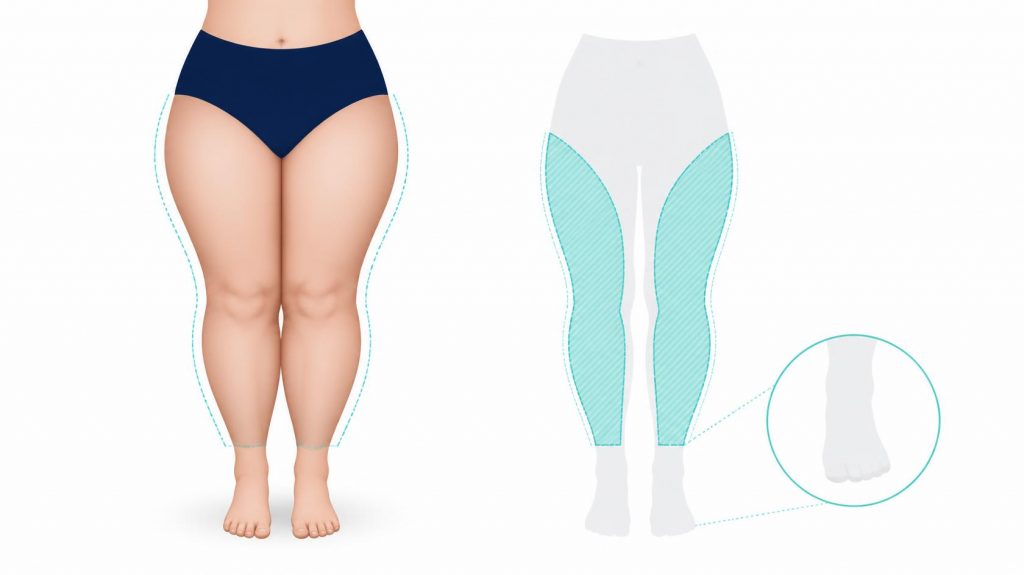
Diagnosis is clinical
Currently there are no officially approved imaging tests, serological analyses or genetic tests to confirm lipedema. The consensus insists, with a very high level of expert agreement, that diagnosis must be clinical: it relies on history, physical examination and the exclusion of differential diagnoses.
Hence the importance of professional training: the sooner the condition is identified, the sooner a treatment can be started that improves the patient’s quality of life. The consensus acknowledges that delayed diagnosis increases the burden of symptoms and negatively affects patients’ well-being.
|
The realistic therapeutic goal in lipedema is not to cure, but to relieve symptoms and slow down progression, within an individualised plan. |
A multidisciplinary and conservative approach
The most relevant conclusion of the 2026 consensus, developed through the Delphi method by specialists from a broad group of countries, is that the treatment of lipedema must be multidisciplinary and conservatively based. Surgery — specialised liposuction with lymphatic preservation — is reserved for selected cases with persistent pain, functional limitation or insufficient response to conservative measures.
Conservative management is made up of several elements that work in a coordinated way:
- Patient education and healthy lifestyle habits.
- Nutrition and weight management.
- Compression (garments and pressotherapy).
- Therapeutic exercise.
- Psychological support.
- Physical-lymphatic therapies, such as drainage and radiofrequency.
None of these elements replaces the others: their value lies in the combination, adapted to each patient by the professional’s judgement.
Where radiofrequency fits
Radiofrequency, also referred to as tecar therapy or diathermy, is among the physical and lymphatic therapies used in conservative management. It is important to clarify a common source of confusion in the market: tecar therapy is the category (radiofrequency diathermy), and there exist different brands of devices with different characteristics. Not all brands offer the same treatment option and results.
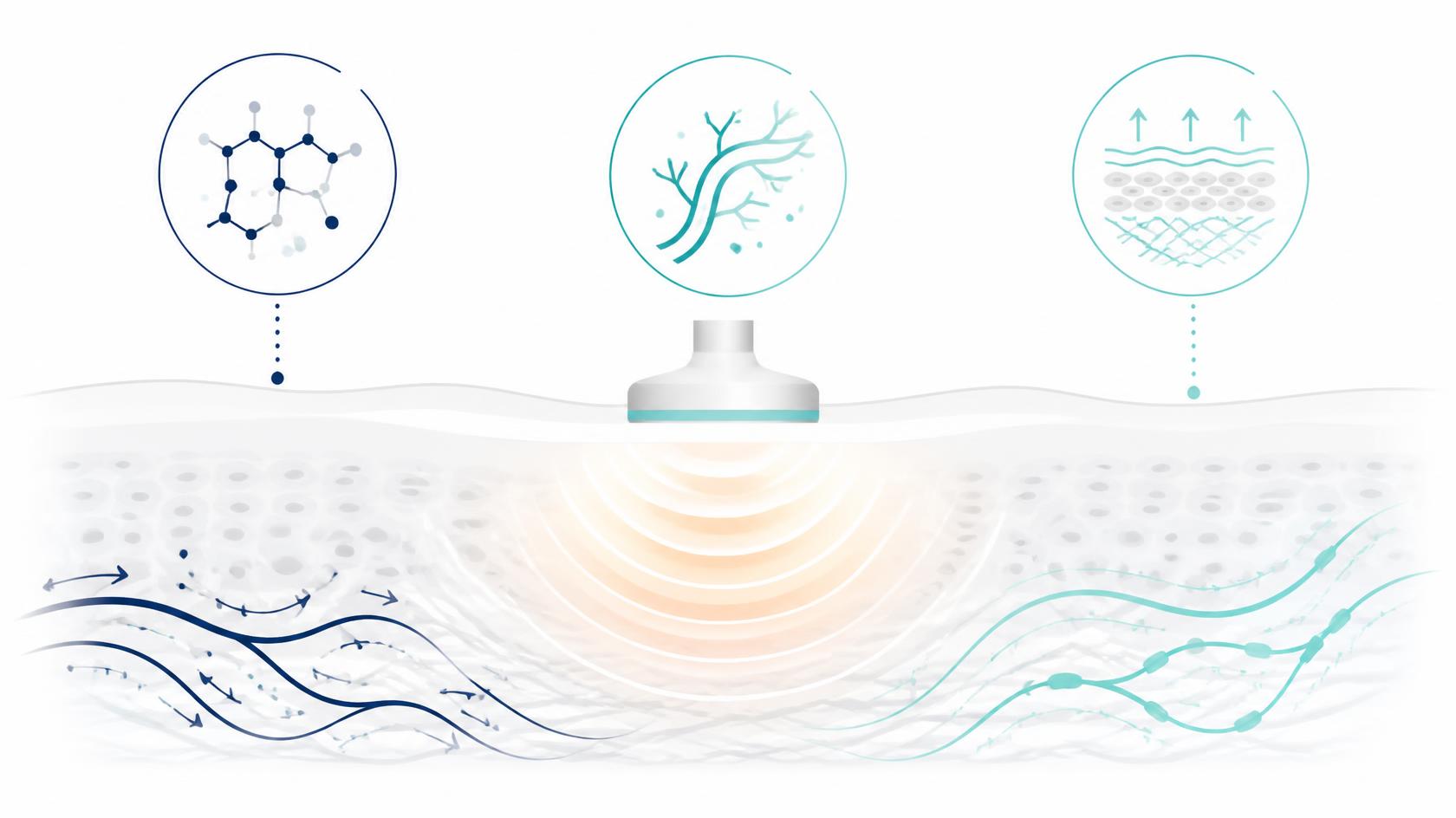
Radiofrequency is associated with three types of effects on tissues:
- Biochemical and metabolic effect: it supports cell metabolism and the exchange of oxygen, nutrients and waste products.
- Vascular and microcirculatory effect: it activates microcirculation and improves hemolymphatic drainage.
- Mechanical effect on fluids: it helps mobilise fluids and tone the vessel walls.
Honest expectations
Precision is essential here, as the credibility of the argument depends on it. Literature attributes a limited volume reduction to conservative treatment (in the order of 5-10%). In other words, volume is not where its greatest value lies. Where conservative management — and radiofrequency within it — shows a more consistent role is in the symptomatic domain: relief of pressure pain, reduction of the sensation of heaviness and tightness, and reduction of edema.
In other words, radiofrequency may help manage symptoms and improve patients’ well-being when used as part of an individualized treatment plan guided by clinical judgement. It should not be presented as a substitute for other interventions or as a cure.
The two modes: capacitive and resistive
Tecar therapy (an acronym for Capacitive and Resistive Electrical Transfer) works with two complementary modes, and in the context of lipedema and vascular health both are relevant:
- Capacitive mode: acts on superficial soft tissues with high water content (muscle, vascular and lymphatic systems). The goal is to reduce hemolymphatic viscosity and stimulate lymphatic drainage.
- Resistive mode: acts on tissues with greater resistance (fascia, areas of fibrosis). It can be applied to lymphatic regions and areas of fibrosis.
Safety and proper use
Radiofrequency is a non-invasive technique that is well tolerated when applied correctly. The patient usually reports a gentle, pleasant sensation of warmth. Like any technique, it requires prior professional assessment and has contraindications that must be respected, including acute infectious or inflammatory processes, thrombosis or phlebitis and active oncological processes, in addition to those determined by clinical judgement in each case.
The role of Capenergy technology
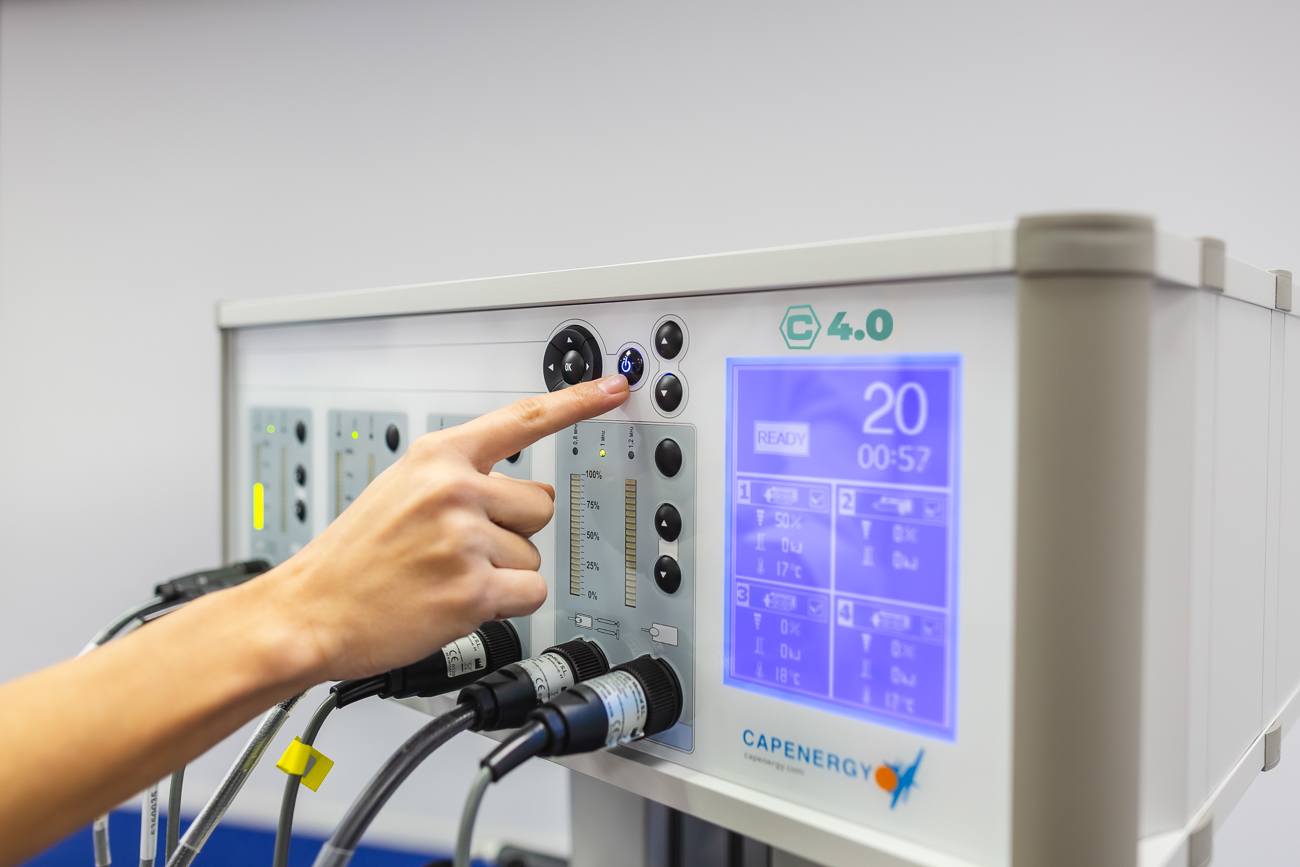
Within this framework, Capenergy’s radiofrequency technology is positioned as a tool at the service of multidisciplinary conservative management. Its second-generation product range incorporates features geared towards this type of work, such as the simultaneous application of capacitive and resistive modes together with drainage protocols, in line with the lymphatic-preservation priority the consensus emphasized by the consensus.
As in all our communication, we frame it with a firm premise: technology supports and enhances the professional’s judgement and touch; it never replaces them.
In summary
- Lipedema is a chronic disease affecting adipose tissue, distinct from obesity and lymphedema, requiring a clinical diagnosis.
- The 2026 international consensus supports a multidisciplinary, conservatively based approach; surgery is reserved for selected cases.
- Radiofrequency is a complementary physical-lymphatic resource, with a more symptomatic than volumetric role.
- Capenergy technology can be part of this plan as a tool at the service of the professional.
